
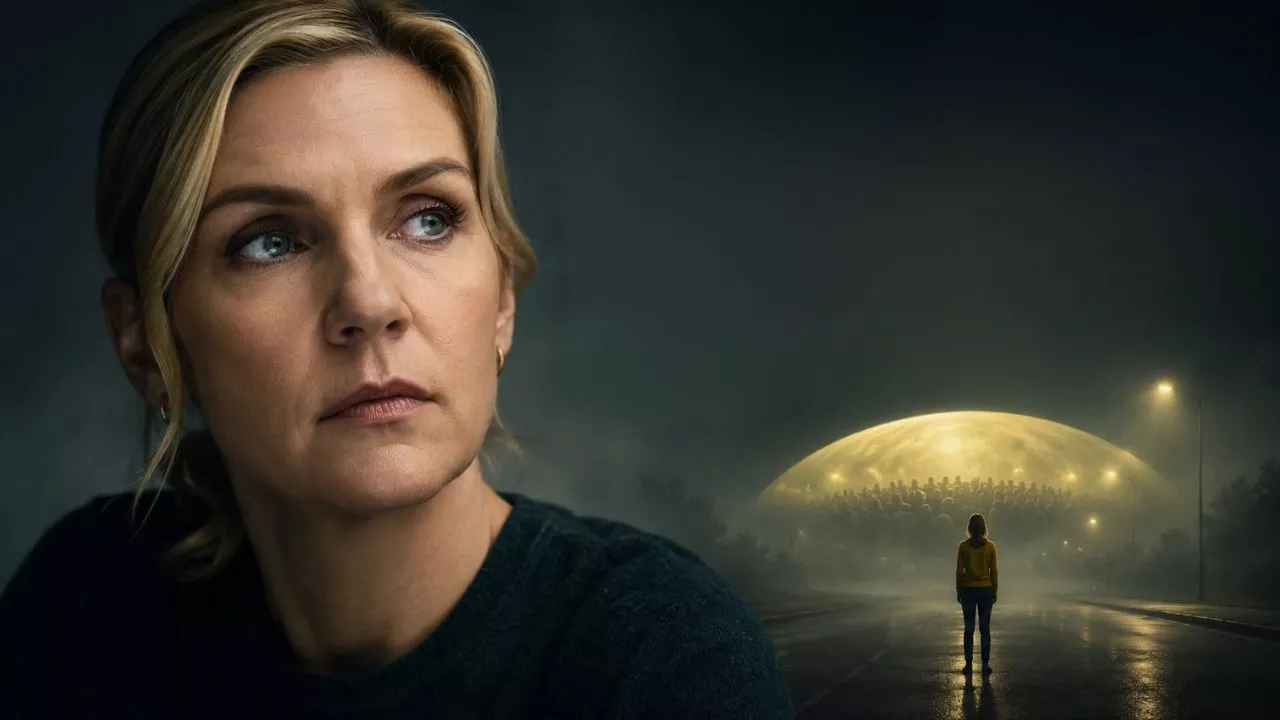
Rhea Seehorn has survived the cutthroat world of Better Call Saul, but nothing in her career quite prepared her for what it felt like to film the opening episode of Apple TV+’s Pluribus — a shoot she is now describing as the most physically and emotionally demanding experience of her entire acting life.
Speaking to Variety during their Making a Scene conversation presented by HBO Max, Seehorn held nothing back about just how brutal that pilot production really was.
Table of Contents
Fifty Days of Non-Stop Intensity
Most pilots have a handful of difficult days scattered across a manageable schedule. The Pluribus pilot was different. Seehorn and the crew spent a straight 50-day block filming the pilot and Episode 2 back to back — with zero breathing room built in.
“This epic pilot that is the night of hell — this whole thing was the hardest thing I’ve ever done in my life,” Seehorn said plainly.
Created by Vince Gilligan — the same mind behind Breaking Bad and Better Call Saul — Pluribus follows Carol (Seehorn), an ordinary woman whose world collapses in a single night when her wife suddenly falls ill. Racing to get her to a hospital, Carol quickly realizes something far more terrifying is happening — everyone around her has merged into a collective hive mind, leaving her as one of the last individuals on Earth.
Every single scene in that pilot demanded something from Seehorn. There were no easy days on set.
“It’s not like, ‘Just get through Thursday and Friday — they’re hard and then we’ll do the scene where you’re sitting and staring,'” she said. “It was all challenging to me.”
Keeping It Real Inside the Chaos
With hundreds of extras filling the hospital scenes and a production scale that rivaled feature films, Seehorn knew the key to making Carol work on screen was staying completely grounded in human emotion — no matter how fantastical the circumstances became.
“Something is happening at a very large scale to a lot of people, but I’m still trying to get my wife medical help,” she explained. “Carol needed to be as real as possible. I am the audience’s access point into it.”
To help anchor herself emotionally, Seehorn made sure her co-star Miriam Shor — who plays Carol’s wife — was physically present on set as often as possible, even during scenes where her character wasn’t visible on camera.
“Touching her hand immediately brought up the whole idea of having that tether with somebody — if you lose them, you’ve lost more than just a partner. You’ve lost your tether to the world,” Seehorn said.
The Camera Tech Built Specifically for This Pilot
The ambition of the production extended well beyond performance. Cinematographer Marshall Adams, a Better Call Saul veteran, worked alongside Gilligan to develop a custom LED driving system for one of the pilot’s most intense sequences — a scene where Carol frantically speeds away from the hospital.
Rather than relying on traditional green screen, Adams designed a setup where an LED screen mounted on the front of the truck provided all the lighting for the interior shots. The truck itself was placed on a “biscuit” — a stripped-down Tesla used as a camera platform — while a second camera faced forward, projecting a live image onto the LED screen so Seehorn could react to the environment in real time.
“She could see and interact with things in real time without having any shadows from it,” Adams said. “It started out as a very simple idea.”
The visual approach across the pilot leaned heavily toward wider lenses — a conscious callback to the cinematographic language Adams and Gilligan developed together on Better Call Saul.
A Crew Screening That Said It All
After wrapping, the production held a rare crew-only screening — and Seehorn says the moment was one of the most rewarding of the entire experience.
“I loved seeing the crew so proud of their work,” she said. “The time, dedication, and artistry — it got on screen. It wasn’t lost.”
Adams summed up the creative process with quiet honesty: “You just kind of find it as you go along. Pretty soon, it reveals itself.”
Pluribus is now streaming on Apple TV+, with the pilot available since last November.
Update: ‘Pluribus’ Season 2 Still Without a Filming Date (2026)
Updated September 2026. Apple TV’s Pluribus, starring Rhea Seehorn, was greenlit for two seasons upfront, so a second season is confirmed even without a premiere date. Creator Vince Gilligan said on a podcast that filming would begin “in a couple of months,” while an Apple TV executive later delivered a disappointing update in August 2026 confirming the show would not return before year’s end. Gilligan says he has “a pretty good idea” of where the story goes next but wants to take his time to protect the show’s quality.
Related on A2Z Filming Location
Discover more from A2Z Filming Location
Subscribe to get the latest posts sent to your email.